Showcase/Book notes/Operating Systems: Three Easy Pieces
Book
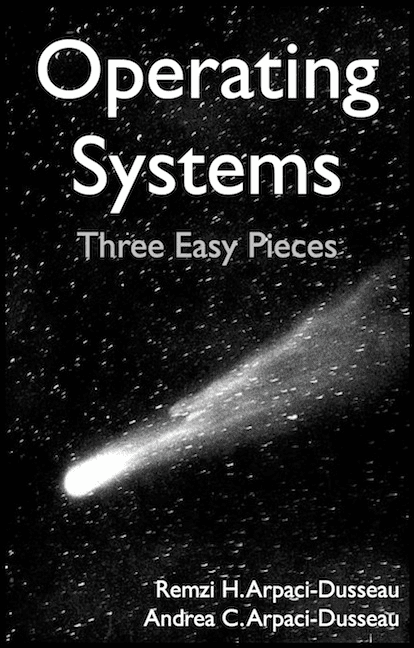
Operating Systems: Three Easy Pieces
Virtualization, concurrency, and persistence — the three pieces that make an OS make sense.
Remzi H. Arpaci-Dusseau · Andrea C. Arpaci-Dusseau
Overview
OSTEP is my go-to systems text when I want intuition before implementation detail. It frames the OS around three ideas: virtualizing the CPU and memory, coordinating concurrent execution, and keeping data durable.
These notes collect short takeaways per chapter, plus lecture playlists and raw PDF notes from reading.
Supplements
Sites and repos that helped alongside the book.
- OSTEP (official site)Free chapters and the full book PDF.
- OSTEP lecture playlistPlaylist I followed alongside the book.
- CS 537: OS (UW–Madison)Course lectures from the book’s authors.
- OSTEP homework & projectsCoding and simulation exercises tied to chapters.
- OSTEP projectsLarger projects (e.g. xv6-style work) that deepen the reading.
- OSDev WikiCommunity wiki for OS development topics and references.
- r/osdevSubreddit for OS development discussion and questions.
Chapters
Open a chapter for notes. More will show up here as reading continues.
- Ch. 7Scheduling: Introduction
FIFO, SJF, STCF, and Round Robin — turnaround vs response time.
- Ch. 8Scheduling: The Multi-Level Feedback Queue
Priority queues when you do not know job length up front.
- Ch. 9Scheduling: Proportional Share
Lottery tickets and stride scheduling for fairness.
- Ch. 15Address Translation
Virtual addresses, base-and-bounds, and dynamic relocation.
- Ch. 16Segmentation
Per-segment base/bounds, fragmentation, and free-list placement.